In today’s fast-paced digital world, ERP system integration is no longer a luxury—it’s a necessity. It connects your business functions into a unified platform, boosting efficiency, accuracy, and scalability like never before.
What Is ERP System Integration?

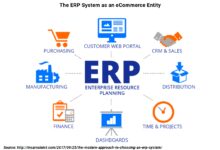
ERP system integration refers to the process of connecting an Enterprise Resource Planning (ERP) system with other software applications, databases, and business processes across an organization. The goal is to create a seamless flow of data between departments such as finance, HR, supply chain, manufacturing, and sales. Instead of operating in silos, every part of the business shares real-time information, enabling smarter decisions and faster operations.


Core Components of ERP Integration
At its heart, ERP system integration involves three main components: data, processes, and technology. Data integration ensures that information from various sources is synchronized and consistent. Process integration aligns workflows across departments so that actions in one area automatically trigger appropriate responses in another. Technology integration involves the actual tools and platforms—APIs, middleware, cloud services—that make the connection possible.
- Data synchronization across departments
- Workflow automation between systems
- Use of APIs and integration platforms
According to Gartner, ERP systems serve as the backbone of enterprise operations, and integrating them properly amplifies their value across the entire organization.
Types of ERP Integration
There are several types of ERP system integration, each serving different business needs. Horizontal integration connects multiple applications at the same level, such as linking your CRM with your ERP. Vertical integration, also known as departmental integration, connects systems within a specific business function—like inventory management with procurement. Point-to-point integration directly links two systems, while middleware-based integration uses a central platform to manage connections across multiple systems.
- Horizontal: CRM + ERP
- Vertical: Procurement + Inventory
- Middleware: Integration platforms like MuleSoft or Dell Boomi
“Integration is not just about connecting systems—it’s about aligning business strategy with technology.” — TechTarget
Why ERP System Integration Matters in 2024
In 2024, businesses face unprecedented pressure to be agile, data-driven, and customer-focused. ERP system integration plays a pivotal role in meeting these demands. Without it, companies risk data duplication, operational delays, and poor decision-making due to fragmented information. Integrated ERP systems provide a single source of truth, ensuring everyone in the organization works from the same data.
Real-Time Data Access Across Departments
One of the most significant advantages of ERP system integration is real-time data access. When sales, finance, and logistics teams can see the same data simultaneously, coordination improves dramatically. For example, when a sales order is placed, inventory levels are instantly updated, shipping is triggered, and accounting records the transaction—all without manual intervention.
This level of synchronization reduces errors and accelerates response times. A study by McKinsey found that companies with integrated data systems make decisions up to 50% faster than those relying on disconnected tools.
Improved Operational Efficiency
ERP system integration eliminates redundant tasks and manual data entry. Instead of employees copying data from one system to another, integration automates the transfer. This not only saves time but also reduces the risk of human error. For instance, integrating your payroll system with your HR module ensures that employee hours, leave balances, and tax details are automatically reflected in salary calculations.
- Reduction in manual data entry
- Fewer errors and inconsistencies
- Streamlined cross-departmental workflows
Companies like Siemens and Unilever have reported efficiency gains of over 30% after implementing comprehensive ERP integrations.
Top 7 Benefits of ERP System Integration
ERP system integration delivers transformative benefits that go beyond simple data sharing. From cost savings to strategic insights, the impact is both immediate and long-term. Let’s explore the seven most powerful advantages that make ERP integration a game-changer for modern enterprises.
1. Enhanced Data Accuracy and Consistency
When data lives in isolated systems, discrepancies are inevitable. One department might have outdated customer information, while another has the latest update. ERP system integration ensures that all systems pull from a centralized database, maintaining data integrity across the board.
For example, when a customer updates their billing address in the CRM, that change is instantly reflected in the ERP, shipping, and invoicing modules. This consistency prevents shipping errors, billing disputes, and customer dissatisfaction.
- Single source of truth for all departments
- Automatic updates across systems
- Reduced data reconciliation efforts
2. Streamlined Business Processes
Integrated ERP systems enable end-to-end automation of business processes. From order-to-cash and procure-to-pay to hire-to-retire, workflows become seamless. When a purchase order is approved, the system can automatically notify suppliers, update inventory forecasts, and schedule payments—without human intervention.
This level of automation not only speeds up operations but also frees up employees to focus on higher-value tasks. According to a report by SAP, businesses that automate core processes through ERP integration see a 25% increase in productivity.
3. Better Decision-Making with Unified Insights
ERP system integration consolidates data from sales, finance, operations, and customer service into unified dashboards. Executives and managers can access real-time reports and analytics, enabling data-driven decisions.
For instance, a CFO can view cash flow projections, outstanding receivables, and inventory costs in one consolidated report. This holistic view supports better forecasting, budgeting, and strategic planning.
- Real-time dashboards and KPIs
- Cross-functional reporting
- Advanced analytics and AI-powered insights
“Data is the new oil, but integration is the refinery.” — Clive Humby, Mathematician and Data Science Pioneer
4. Scalability for Business Growth
As businesses grow, their systems must scale accordingly. A well-integrated ERP system can easily accommodate new users, departments, or even acquisitions. Whether you’re opening a new branch or launching a new product line, integrated systems adapt quickly without requiring massive overhauls.
Cloud-based ERP solutions like Oracle NetSuite and Microsoft Dynamics 365 offer built-in integration capabilities that support global expansion and multi-currency operations.
5. Improved Customer Experience
ERP system integration directly impacts customer satisfaction. When customer data is shared across sales, service, and fulfillment teams, response times improve, and service becomes more personalized.
For example, a customer service agent can instantly see a client’s order history, payment status, and support tickets—enabling faster resolution. According to Salesforce, 80% of customers say the experience a company provides is as important as its products or services.
6. Cost Reduction and ROI Improvement
While ERP integration requires an initial investment, the long-term savings are substantial. Companies reduce costs related to manual labor, data errors, system downtime, and inefficient processes.
A study by Nucleus Research found that the average ROI for ERP systems is $4.20 for every dollar spent, with integrated systems delivering even higher returns due to increased efficiency and reduced operational friction.
- Lower IT maintenance costs
- Reduced operational overhead
- Higher return on digital investments
7. Regulatory Compliance and Data Security
Integrated ERP systems enhance compliance with regulations like GDPR, SOX, and HIPAA by ensuring data is stored securely and access is properly controlled. Audit trails are automatically generated, and data encryption is standardized across platforms.
For example, in the healthcare sector, integrating ERP with electronic health records (EHR) ensures patient data is handled in compliance with HIPAA requirements. This reduces legal risks and strengthens customer trust.
Common Challenges in ERP System Integration
Despite its many benefits, ERP system integration is not without challenges. Organizations often face technical, cultural, and strategic hurdles that can delay or derail integration efforts. Understanding these obstacles is the first step toward overcoming them.
Data Silos and Legacy Systems
One of the biggest challenges is breaking down data silos created by legacy systems. Many companies still rely on outdated software that doesn’t support modern integration protocols. Migrating data from these systems to a new ERP platform can be complex and time-consuming.
For example, a manufacturing firm using a 20-year-old inventory system may struggle to connect it with a cloud-based ERP. Solutions include using middleware, data transformation tools, or phased migration strategies.
- Legacy systems lack API support
- Data format incompatibility
- High cost of system replacement
Resistance to Change
Employees often resist ERP integration due to fear of job loss, unfamiliarity with new tools, or disruption to daily routines. Without proper change management, even the most technically sound integration can fail.
Successful organizations invest in training, clear communication, and involving employees early in the process. According to Prosci, projects with strong change management are six times more likely to meet objectives.
Integration Complexity and Cost
ERP system integration can be technically complex, especially when connecting multiple third-party applications. Custom coding, API management, and system testing require skilled IT personnel and can be expensive.
However, the rise of integration Platform-as-a-Service (iPaaS) solutions like MuleSoft and Dell Boomi has simplified the process, offering pre-built connectors and drag-and-drop interfaces that reduce development time and cost.
Best Practices for Successful ERP System Integration
To maximize the benefits and minimize the risks of ERP system integration, organizations should follow proven best practices. These strategies ensure a smooth transition, user adoption, and long-term success.
Define Clear Goals and KPIs
Before starting integration, define what success looks like. Are you aiming to reduce order processing time by 30%? Improve inventory accuracy? Set measurable goals and track them throughout the project.
Key Performance Indicators (KPIs) such as data accuracy rate, system uptime, and user adoption rate help monitor progress and justify investment.
- Align integration goals with business strategy
- Establish baseline metrics before implementation
- Monitor KPIs post-integration
Choose the Right Integration Approach
There are several integration approaches: point-to-point, middleware, and iPaaS. Point-to-point is simple but hard to scale. Middleware offers more control but requires more maintenance. iPaaS provides flexibility, scalability, and faster deployment.
For most modern businesses, iPaaS is the preferred choice due to its cloud-native architecture and support for hybrid environments.
Invest in Change Management
Technology is only half the battle. People are the other half. A successful ERP system integration requires a comprehensive change management plan that includes training, communication, and leadership support.
Conduct workshops, create user guides, and appoint integration champions within departments to drive adoption and address concerns.
“Technology enables change, but people drive it.” — John P. Kotter, Leadership Expert
ERP Integration Tools and Technologies
The success of ERP system integration heavily depends on the tools and technologies used. From APIs to cloud platforms, the right tech stack can make integration faster, more reliable, and easier to maintain.
APIs: The Backbone of Modern Integration
Application Programming Interfaces (APIs) are the foundation of ERP system integration. They allow different software systems to communicate and exchange data securely. RESTful APIs, in particular, are widely used due to their simplicity and compatibility with web-based applications.
Most modern ERP systems, including SAP S/4HANA and Oracle ERP Cloud, offer robust API libraries that developers can use to build custom integrations.
- REST and SOAP APIs for data exchange
- OAuth for secure authentication
- Webhooks for real-time event triggering
Integration Platforms (iPaaS)
iPaaS solutions like MuleSoft, Dell Boomi, and Microsoft Azure Logic Apps provide a centralized environment for managing integrations. They offer pre-built connectors for popular ERP systems, drag-and-drop workflow designers, and monitoring tools.
These platforms reduce the need for custom coding and make it easier to scale integrations as business needs evolve.
Cloud ERP and Hybrid Integration
With the rise of cloud computing, many organizations are adopting cloud-based ERP systems. However, some still rely on on-premise applications. Hybrid integration bridges the gap, allowing cloud and on-premise systems to work together seamlessly.
Tools like AWS AppFlow and Google Cloud Apigee support hybrid scenarios, ensuring data flows smoothly regardless of where systems are hosted.
Future Trends in ERP System Integration
The landscape of ERP system integration is evolving rapidly, driven by advancements in AI, automation, and cloud technology. Staying ahead of these trends ensures your business remains competitive and agile.
AI-Powered Integration
Artificial Intelligence is transforming ERP integration by enabling intelligent data mapping, anomaly detection, and predictive analytics. AI can automatically detect data patterns, suggest integration rules, and even fix errors without human intervention.
For example, AI can identify that a customer’s name is spelled differently in two systems and recommend a merge—improving data quality over time.
Event-Driven Architecture
Traditional integration often relies on scheduled data syncs. Event-driven architecture (EDA) changes this by triggering actions in real time based on specific events—like a new order being placed or inventory falling below a threshold.
This approach enables faster responses and more dynamic business processes, making it ideal for e-commerce and supply chain applications.
Low-Code and No-Code Integration
As businesses demand faster integration, low-code and no-code platforms are gaining popularity. These tools allow non-technical users to build integrations using visual interfaces, reducing dependency on IT teams.
Platforms like Zapier and Microsoft Power Automate are making ERP integration accessible to small and mid-sized businesses that lack dedicated development resources.
What is ERP system integration?
ERP system integration is the process of connecting an Enterprise Resource Planning (ERP) system with other business applications and databases to enable seamless data flow and automated workflows across departments like finance, HR, and supply chain.
What are the main benefits of ERP integration?
The main benefits include improved data accuracy, streamlined operations, better decision-making, cost savings, enhanced customer experience, scalability, and stronger compliance and security.
What are common challenges in ERP integration?
Common challenges include legacy systems, data silos, resistance to change, integration complexity, and high costs. These can be mitigated with proper planning, change management, and the use of modern integration platforms.
Which tools are best for ERP system integration?
Popular tools include iPaaS platforms like MuleSoft and Dell Boomi, cloud ERP systems with built-in APIs, and low-code platforms like Microsoft Power Automate. The choice depends on business size, complexity, and technical capabilities.
How does AI impact ERP system integration?
AI enhances ERP integration by automating data mapping, detecting anomalies, predicting system behavior, and improving data quality. It enables smarter, self-healing integrations that require less manual oversight.
ERP system integration is a strategic imperative for modern businesses. It breaks down data silos, automates workflows, and empowers organizations with real-time insights. While challenges exist, the benefits far outweigh the risks when approached with clear goals, the right tools, and strong change management. As technology evolves, integration will become even more intelligent and accessible, driving innovation and growth across industries.
Further Reading:
