Choosing the right ERP software can feel overwhelming, but a smart ERP software comparison simplifies the decision. Discover the top platforms, features, and real-world benefits to find your perfect match and revolutionize your operations today.
Understanding ERP Software and Its Business Impact

Enterprise Resource Planning (ERP) software is the backbone of modern business operations. It integrates core processes—like finance, HR, supply chain, and customer management—into a unified system. This integration eliminates data silos, reduces redundancy, and enhances decision-making across departments. A thorough ERP software comparison starts with understanding how these systems transform business efficiency.


What Is ERP Software?
ERP software is a suite of integrated applications that manage day-to-day business activities. Originally developed for manufacturing, ERP now supports industries ranging from retail to healthcare. At its core, ERP centralizes data from various departments into a single database, ensuring consistency and real-time access. This allows teams to collaborate more effectively and leadership to make informed decisions based on accurate, up-to-date information.
- Centralizes data across departments
- Automates routine business processes
- Provides real-time analytics and reporting
According to Gartner, ERP systems are essential for organizations aiming to scale operations efficiently and maintain competitive advantage in fast-moving markets.
Key Functional Modules in ERP Systems
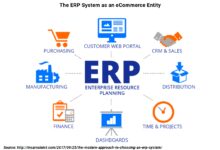
A comprehensive ERP solution includes multiple functional modules, each designed to manage a specific business area. These modules are interconnected, allowing seamless data flow. Common modules include:
erp software comparison – Erp software comparison menjadi aspek penting yang dibahas di sini.
- Financial Management: Handles accounting, budgeting, and financial reporting.
- Human Capital Management (HCM): Manages payroll, recruitment, performance reviews, and employee data.
- Supply Chain Management (SCM): Tracks inventory, procurement, logistics, and supplier relationships.
- Customer Relationship Management (CRM): Supports sales, marketing, and customer service functions.
- Manufacturing and Operations: Manages production planning, quality control, and shop floor operations.
When conducting an ERP software comparison, evaluating which modules align with your business needs is critical. Not every organization requires all modules, but scalability ensures future growth without system replacement.
Benefits of Implementing ERP Software
The right ERP system delivers measurable improvements across the organization. Businesses report faster reporting cycles, improved compliance, and enhanced customer satisfaction. Key benefits include:
- Increased operational efficiency through automation
- Improved data accuracy and visibility
- Better regulatory compliance and audit readiness
- Enhanced collaboration across departments
- Scalability to support business growth
“ERP systems are not just about technology—they’re about transforming business processes to drive agility and innovation.” — Nucleus Research
For example, a mid-sized manufacturer using an ERP system reduced order processing time by 40% and cut inventory costs by 25% within the first year of implementation, as reported in a Nucleus Research case study.
ERP Software Comparison: Top 7 Platforms Reviewed
Conducting a detailed ERP software comparison helps identify the best fit for your business size, industry, and goals. Below is an in-depth review of seven leading ERP platforms, highlighting their strengths, ideal use cases, and limitations.
1. SAP S/4HANA
SAP S/4HANA is a next-generation ERP suite built on an in-memory database platform. It’s designed for large enterprises with complex operations and global footprints. Known for its robust functionality and deep industry-specific solutions, SAP dominates the high-end ERP market.
erp software comparison – Erp software comparison menjadi aspek penting yang dibahas di sini.
- Real-time data processing with SAP HANA
- AI and machine learning capabilities
- Extensive customization and integration options
However, SAP S/4HANA often requires significant investment in licensing, implementation, and ongoing maintenance. The learning curve is steep, and businesses typically need dedicated IT teams or consultants. According to SAP’s official site, over 10,000 customers worldwide rely on S/4HANA for mission-critical operations.
2. Oracle NetSuite
Oracle NetSuite is a cloud-based ERP platform ideal for mid-sized businesses and fast-growing companies. It offers a complete suite of applications including financials, CRM, e-commerce, and inventory management—all in a single system.
- True cloud-native architecture
- Scalable for international operations
- Strong financial and reporting capabilities
NetSuite excels in automation and real-time visibility. Its modular design allows businesses to start with core functions and expand as needed. A key advantage in any ERP software comparison is its rapid deployment—often within 100 days. As noted by Oracle NetSuite, it supports over 29,000 customers globally across diverse industries.
3. Microsoft Dynamics 365
Microsoft Dynamics 365 combines ERP and CRM functionalities into a flexible, modular platform. It integrates seamlessly with Microsoft 365, Power BI, and Azure, making it a top choice for organizations already using Microsoft ecosystems.
- Deep integration with Office 365 and Teams
- AI-driven insights and predictive analytics
- Flexible deployment (cloud, on-premise, hybrid)
Dynamics 365 is particularly strong in sales, service, and field operations. Its user-friendly interface reduces training time. However, advanced features may require additional licensing. For more details, visit Microsoft’s Dynamics 365 page.
erp software comparison – Erp software comparison menjadi aspek penting yang dibahas di sini.
4. Infor CloudSuite
Infor CloudSuite offers industry-specific ERP solutions tailored for sectors like healthcare, manufacturing, and distribution. Built on a cloud-first architecture, it emphasizes usability and modern design.
- Vertical-specific functionality out of the box
- Mobile-first user experience
- Integration with Infor OS for AI and analytics
Infor differentiates itself by focusing on niche markets. For example, Infor CloudSuite Industrial is optimized for discrete manufacturers. While powerful, it may lack the broad ecosystem of SAP or Oracle. Learn more at Infor’s official site.
5. Epicor ERP
Epicor ERP is a strong contender for manufacturing, distribution, and retail businesses. It offers both cloud and on-premise deployment options with a focus on operational efficiency.
- Robust shop floor and production management
- Advanced supply chain planning
- Strong warehouse and logistics tools
Epicor is known for its reliability in complex manufacturing environments. It supports lean manufacturing and quality control processes. However, its user interface is less modern compared to newer platforms. More information is available at Epicor’s product page.
6. Sage Intacct
Sage Intacct is a cloud-based financial management and ERP solution designed for mid-sized organizations and service-based industries. It’s particularly popular among accounting firms and professional services.
erp software comparison – Erp software comparison menjadi aspek penting yang dibahas di sini.
- Powerful financial automation and reporting
- Multi-entity and multi-currency support
- Strong compliance and audit trail features
Sage Intacct shines in financial accuracy and real-time dashboards. It integrates well with third-party applications like Bill.com and Expensify. While it lacks deep manufacturing modules, it’s a top pick in ERP software comparison for finance-centric businesses. See Sage Intacct’s site for customer success stories.
7. Workday
Workday is a cloud-based ERP system with a strong focus on human capital management (HCM) and financial management. It’s widely adopted by large enterprises, especially in the services and education sectors.
- Intuitive, consumer-grade user interface
- Real-time workforce analytics
- Continuous updates without downtime
Workday’s strength lies in its people-centric design and agile development model. However, it offers limited supply chain and manufacturing capabilities, making it less suitable for industrial firms. According to Workday’s website, it serves over 6,000 organizations globally, including major brands like Netflix and Toyota.
Key Factors in ERP Software Comparison
An effective ERP software comparison goes beyond features. It requires evaluating multiple dimensions to ensure long-term success and alignment with business strategy.
Deployment Options: Cloud vs. On-Premise
One of the first decisions in an ERP software comparison is deployment model. Cloud ERP systems are hosted by the vendor and accessed via the internet. They offer lower upfront costs, automatic updates, and faster deployment. On-premise ERP requires local servers and IT infrastructure, giving organizations more control but higher maintenance costs.
erp software comparison – Erp software comparison menjadi aspek penting yang dibahas di sini.
- Cloud ERP: Lower TCO, scalable, accessible from anywhere
- On-Premise ERP: Greater control, better for data-sensitive industries
- Hybrid: Combines both models for flexibility
According to a 2023 IDC report, over 70% of new ERP implementations are cloud-based, reflecting a clear industry shift.
Scalability and Customization
Your ERP system should grow with your business. Scalability refers to the system’s ability to handle increased users, transactions, and data volume. Customization allows tailoring workflows, reports, and interfaces to match unique business processes.
- Look for modular architectures that allow incremental expansion
- Assess API availability for third-party integrations
- Evaluate vendor support for industry-specific customizations
For example, Oracle NetSuite offers SuiteCloud for custom development, while SAP provides ABAP for deep customization. Choosing a platform with strong developer tools ensures long-term adaptability.
Total Cost of Ownership (TCO)
TCO is a critical factor in any ERP software comparison. It includes licensing, implementation, training, maintenance, and upgrade costs. Cloud ERP typically has a subscription model, while on-premise involves large upfront investments.
- Cloud: $1,000–$5,000/month for mid-sized firms
- On-Premise: $100,000+ initial investment
- Hidden costs: data migration, consulting, downtime
A Panorama Consulting report found that 57% of ERP projects exceed their initial budget, often due to underestimating implementation complexity.
erp software comparison – Erp software comparison menjadi aspek penting yang dibahas di sini.
Industry-Specific ERP Solutions
Not all ERP systems are created equal across industries. Some platforms offer specialized features tailored to specific sectors, making them more effective than generic solutions.
Manufacturing
Manufacturers need ERP systems with advanced production planning, bill of materials (BOM) management, and quality control. Systems like Epicor and Infor CloudSuite Industrial provide real-time shop floor monitoring and lean manufacturing support.
- Shop floor control and job tracking
- Material requirements planning (MRP)
- Quality management and compliance (e.g., ISO, FDA)
For discrete manufacturers, Epicor’s Kinetic platform offers cloud-based agility with deep manufacturing functionality.
Retail and E-Commerce
Retailers require seamless integration between inventory, point-of-sale (POS), and e-commerce platforms. Oracle NetSuite and SAP Business One offer omnichannel capabilities, enabling real-time inventory updates across online and physical stores.
- Unified inventory management
- Customer loyalty and CRM integration
- Real-time sales analytics
NetSuite’s SuiteCommerce allows businesses to launch and manage online stores directly within the ERP, reducing system fragmentation.
erp software comparison – Erp software comparison menjadi aspek penting yang dibahas di sini.
Healthcare
Healthcare organizations need ERP systems that support patient billing, regulatory compliance (HIPAA), and resource scheduling. Infor Healthcare and Workday are popular choices due to their focus on HCM and financial transparency.
- Patient accounting and insurance claims processing
- Staff scheduling and payroll integration
- Audit-ready financial reporting
These systems help hospitals and clinics improve operational efficiency while maintaining strict data privacy standards.
Implementation Best Practices
Even the best ERP software can fail without proper implementation. Following proven strategies increases the likelihood of success and minimizes disruption.
Define Clear Objectives and KPIs
Before selecting a system, define what success looks like. Establish key performance indicators (KPIs) such as reduced order processing time, improved inventory turnover, or faster financial close cycles.
- Align ERP goals with overall business strategy
- Involve stakeholders from all departments
- Set measurable, time-bound objectives
Clear goals guide vendor selection and help measure post-implementation ROI.
erp software comparison – Erp software comparison menjadi aspek penting yang dibahas di sini.
Choose the Right Implementation Partner
Most ERP vendors work with certified partners who handle deployment, data migration, and training. Selecting an experienced partner with industry expertise is crucial.
- Check partner certifications and customer references
- Evaluate their project management methodology
- Ensure post-go-live support is included
For example, Microsoft Gold Partners undergo rigorous training and must demonstrate successful project delivery.
Data Migration and System Integration
Data migration is often the most complex part of ERP implementation. It involves transferring data from legacy systems into the new ERP while ensuring accuracy and integrity.
- Perform data cleansing before migration
- Use automated tools to reduce errors
- Test data in a sandbox environment first
Integration with existing tools (e.g., CRM, HRIS, e-commerce) ensures seamless workflows. APIs and middleware like MuleSoft or Dell Boomi are commonly used.
User Adoption and Training Strategies
Even the most powerful ERP system fails if employees don’t use it. User adoption is a major challenge, with studies showing that up to 75% of ERP projects face resistance from end-users.
erp software comparison – Erp software comparison menjadi aspek penting yang dibahas di sini.
Design Intuitive Workflows
Customize the ERP interface to match user roles and daily tasks. Simplify navigation and reduce clicks to complete common actions.
- Create role-based dashboards
- Use mobile access for field workers
- Enable voice commands or AI assistants where possible
Workday and Dynamics 365 excel in user experience design, reducing the learning curve.
Comprehensive Training Programs
Effective training ensures users understand the system’s value and functionality. Use a mix of methods: live workshops, video tutorials, and hands-on simulations.
- Train super-users first to become internal champions
- Offer ongoing refresher courses
- Provide quick-reference guides and help desks
According to Gartner, organizations that invest in change management see 30% higher user adoption rates.
Change Management and Communication
Resistance to change is natural. Proactive communication helps employees understand why the ERP is being implemented and how it benefits them.
erp software comparison – Erp software comparison menjadi aspek penting yang dibahas di sini.
- Share success stories from pilot teams
- Address concerns through town halls or Q&A sessions
- Recognize early adopters and reward participation
A transparent change management plan builds trust and accelerates adoption.
Future Trends in ERP Software
The ERP landscape is evolving rapidly, driven by advancements in AI, automation, and cloud computing. Staying ahead of trends ensures your ERP investment remains relevant.
Artificial Intelligence and Machine Learning
Modern ERP systems use AI to automate tasks, predict trends, and provide intelligent recommendations. For example, SAP S/4HANA uses AI for predictive maintenance, while NetSuite offers AI-driven forecasting.
- Automated invoice matching and fraud detection
- Predictive demand planning
- Chatbots for employee self-service
AI reduces manual work and improves accuracy, making ERP systems more proactive than reactive.
Internet of Things (IoT) Integration
IoT devices feed real-time data into ERP systems, enabling smarter decision-making. In manufacturing, sensors on machines report performance data directly to the ERP for maintenance scheduling.
erp software comparison – Erp software comparison menjadi aspek penting yang dibahas di sini.
- Real-time equipment monitoring
- Automated inventory replenishment
- Energy usage optimization
SAP and Oracle are leaders in IoT-enabled ERP, offering platforms that connect physical assets to business systems.
Blockchain for Transparency and Security
Blockchain technology enhances data integrity and traceability in supply chains. ERP systems are beginning to integrate blockchain to verify transactions and prevent fraud.
- Secure, tamper-proof audit trails
- Transparent supplier and logistics tracking
- Smart contracts for automated payments
While still emerging, blockchain integration is expected to grow, especially in industries like pharmaceuticals and food distribution.
What is the best ERP software for small businesses?
For small businesses, Oracle NetSuite and Sage Intacct are top choices due to their cloud-based flexibility, affordable pricing, and scalability. NetSuite offers a full suite of tools, while Sage Intacct excels in financial management.
erp software comparison – Erp software comparison menjadi aspek penting yang dibahas di sini.
How long does ERP implementation take?
Implementation time varies by system and complexity. Cloud ERPs like NetSuite can go live in 3–6 months, while large on-premise systems like SAP may take 12–24 months.
Can ERP systems integrate with existing software?
Yes, most modern ERP systems offer APIs and integration tools to connect with CRM, e-commerce, HR, and other platforms. Middleware solutions like Zapier or MuleSoft enhance connectivity.
Is cloud ERP secure?
Cloud ERP is generally secure, with vendors investing heavily in encryption, compliance, and threat detection. Reputable providers meet standards like SOC 2, GDPR, and HIPAA.
What are the risks of ERP implementation?
Common risks include budget overruns, data migration errors, low user adoption, and inadequate training. Mitigate these by choosing experienced partners and following best practices.
Selecting the right ERP software is a strategic decision that impacts every part of your business. Through a thorough ERP software comparison, you can identify platforms that align with your goals, industry, and budget. From SAP and Oracle to NetSuite and Workday, each solution offers unique strengths. Consider deployment models, scalability, total cost, and user experience. With proper planning, change management, and an eye on future trends like AI and IoT, your ERP system can become a powerful engine for growth, efficiency, and innovation.
Further Reading:
