In today’s fast-paced digital world, ERP business automation is no longer a luxury—it’s a necessity. From streamlining operations to boosting decision-making, integrated systems are transforming how companies operate with unmatched efficiency and precision.
What Is ERP Business Automation?

Enterprise Resource Planning (ERP) business automation refers to the integration of core business processes—such as finance, HR, supply chain, and inventory—into a unified software platform that automates workflows, reduces manual tasks, and enhances data accuracy. This digital transformation allows organizations to operate more efficiently, respond faster to market changes, and scale with confidence.



Core Components of ERP Systems
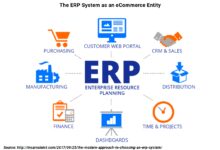
Modern ERP platforms are built on a modular architecture, allowing businesses to adopt only the components they need while maintaining seamless integration across departments. Key modules typically include:
- Financial Management: Automates accounting tasks like general ledger, accounts payable/receivable, budgeting, and financial reporting.
- Human Capital Management (HCM): Streamlines payroll, recruitment, performance reviews, and employee onboarding.
- Supply Chain & Inventory Management: Tracks inventory levels, manages procurement, and optimizes logistics in real time.
- Customer Relationship Management (CRM): Integrates sales, marketing, and customer service data to improve client engagement.
- Manufacturing & Production: Supports production planning, quality control, and shop floor monitoring.
These modules communicate through a centralized database, ensuring that every department accesses consistent, up-to-date information. This eliminates data silos and reduces the risk of errors caused by duplicate entries or outdated spreadsheets.
How Automation Enhances ERP Functionality
Automation within ERP systems goes beyond simple task execution. It introduces intelligent workflows that trigger actions based on predefined rules, user behavior, or real-time data inputs. For example, when inventory levels drop below a set threshold, the system can automatically generate a purchase order and notify the procurement team.
Advanced ERP solutions leverage technologies like artificial intelligence (AI), machine learning (ML), and robotic process automation (RPA) to predict trends, detect anomalies, and suggest corrective actions. According to Gartner, modern ERP systems are evolving into intelligent platforms capable of self-optimization and proactive decision support.
“ERP is the backbone of digital transformation, enabling organizations to automate processes, gain real-time insights, and drive innovation.” — Gartner Research
7 Key Benefits of ERP Business Automation
Implementing ERP business automation delivers measurable improvements across multiple dimensions of an organization. These benefits extend beyond cost savings to include strategic advantages in agility, compliance, and customer satisfaction.
1. Increased Operational Efficiency
One of the most immediate impacts of ERP business automation is the dramatic improvement in operational efficiency. By automating repetitive tasks such as invoice processing, time tracking, and report generation, employees can focus on higher-value activities.
For instance, a manufacturing company using automated purchase order workflows reduced its procurement cycle time by 60%, according to a case study published by SAP. Tasks that once took days are now completed in hours, with fewer errors and less supervision required.
- Reduction in manual data entry and associated errors
- Faster processing of orders, payments, and deliveries
- Improved resource allocation through real-time visibility
Automation also enables standardization of processes across departments and locations, ensuring consistency in how work is performed—especially critical for multinational corporations.
2. Real-Time Data Access and Reporting
ERP business automation provides a single source of truth for all organizational data. Instead of relying on fragmented spreadsheets or legacy systems, decision-makers can access dashboards that reflect current performance metrics across finance, sales, inventory, and operations.
Real-time reporting allows for quicker responses to market shifts. For example, if a sudden spike in demand occurs, managers can instantly view available stock, production capacity, and shipping timelines to adjust plans accordingly. This agility is crucial in competitive industries where speed-to-market determines success.
- Customizable dashboards for executives and department heads
- Automated KPI tracking and alert systems
- Integration with business intelligence (BI) tools for deeper analysis
Companies using real-time ERP analytics report a 30% improvement in decision-making speed, as noted in a McKinsey & Company report on digital transformation in manufacturing.
3. Enhanced Accuracy and Reduced Errors
Manual processes are inherently prone to human error—whether it’s a misplaced decimal in an invoice or a missed deadline in a project schedule. ERP business automation minimizes these risks by enforcing data validation rules, automating calculations, and maintaining audit trails.
For example, in financial reporting, automated reconciliation processes ensure that all transactions are accounted for and discrepancies are flagged immediately. This not only improves accuracy but also strengthens internal controls and supports regulatory compliance.
- Automated data validation and error detection
- Version control and change tracking
- Compliance with GAAP, IFRS, and other accounting standards
A study by Nucleus Research found that companies implementing ERP systems saw a 45% reduction in financial reporting errors within the first year of deployment.
ERP Business Automation and Digital Transformation
ERP business automation is a cornerstone of broader digital transformation initiatives. It acts as the central nervous system of a digitally enabled enterprise, connecting people, processes, and technology across the entire value chain.
Driving Innovation Through Integration
Modern ERP platforms are designed to integrate seamlessly with other digital tools such as e-commerce platforms, cloud storage, IoT devices, and AI-powered analytics engines. This interconnected ecosystem allows businesses to innovate faster and deliver superior customer experiences.
For example, a retail company can link its ERP system with its online store and warehouse management system. When a customer places an order, the ERP automatically updates inventory, triggers shipping, and synchronizes financial records—all without human intervention.
- API-first architecture enables easy third-party integrations
- Cloud-based ERPs support remote work and mobile access
- IoT sensors feed real-time production data into ERP for predictive maintenance
According to IBM, organizations that integrate ERP with emerging technologies achieve 2.3x higher ROI than those using standalone systems.
Supporting Scalability and Growth
As businesses grow, their operational complexity increases. ERP business automation provides the scalability needed to manage expansion—whether entering new markets, launching new products, or acquiring other companies.
Cloud-based ERP solutions, in particular, offer flexible licensing models and on-demand resource allocation. This means a startup can start with basic financial and inventory modules and gradually add HR, CRM, and advanced analytics as it scales.
- Modular design allows incremental adoption
- Multi-currency and multi-language support for global operations
- Centralized control with localized execution
A survey by Panorama Consulting revealed that 78% of mid-sized companies cited scalability as a primary reason for investing in ERP automation.
Choosing the Right ERP Business Automation Solution
Selecting the right ERP system is a strategic decision that requires careful evaluation of business needs, budget, and long-term goals. The market offers a wide range of options—from on-premise legacy systems to cloud-native platforms with built-in AI capabilities.
On-Premise vs. Cloud ERP: What’s Best for You?
The choice between on-premise and cloud ERP depends on several factors including control, security, cost, and IT infrastructure.
- On-Premise ERP: Installed locally on company servers. Offers full control over data and customization but requires significant upfront investment and ongoing maintenance.
- Cloud ERP: Hosted on vendor servers and accessed via the internet. Lower initial costs, automatic updates, and greater flexibility—but may raise concerns about data sovereignty and internet dependency.
According to Gartner, over 80% of new ERP implementations in 2023 were cloud-based, reflecting a clear industry shift toward subscription models and SaaS delivery.
“The future of ERP is in the cloud—offering agility, scalability, and faster time-to-value.” — Gartner, 2023 Market Trends
Key Features to Look For
When evaluating ERP business automation solutions, focus on features that align with your strategic objectives. Essential capabilities include:
- Process Automation Tools: Workflow engines, approval chains, and RPA integrations.
- Mobile Accessibility: Apps or responsive design for remote access.
- AI and Predictive Analytics: Forecasting tools for sales, inventory, and cash flow.
- Security & Compliance: Role-based access, encryption, GDPR/CCPA readiness.
- User Experience (UX): Intuitive interface to reduce training time and increase adoption.
Vendors like Oracle NetSuite, Microsoft Dynamics 365, SAP S/4HANA, and Infor offer robust automation features tailored to different industries and company sizes.
Implementation Challenges and How to Overcome Them
Despite its benefits, ERP business automation implementation can be complex and risky. Studies show that up to 70% of ERP projects face delays, budget overruns, or fail to meet expectations. Understanding common pitfalls is key to a successful rollout.
Data Migration and System Integration
One of the biggest challenges is migrating data from legacy systems into the new ERP platform. Incomplete, duplicate, or inconsistent data can compromise system integrity and lead to inaccurate reporting.
To mitigate this risk, organizations should:
- Conduct a thorough data audit before migration
- Cleanse and standardize data using ETL (Extract, Transform, Load) tools
- Perform test migrations in a sandbox environment
- Establish data governance policies post-go-live
Integration with existing software (e.g., CRM, payroll, or e-commerce) also requires careful planning. APIs and middleware solutions like MuleSoft or Dell Boomi can bridge gaps between systems.
Change Management and User Adoption
Even the most advanced ERP system will fail if employees resist using it. Resistance often stems from fear of job loss, lack of training, or poor communication.
Effective change management strategies include:
- Engaging stakeholders early in the selection and design process
- Providing role-based training and ongoing support
- Appointing internal champions to advocate for the system
- Communicating the benefits clearly and consistently
A study by PwC found that companies with strong change management practices were 6 times more likely to achieve successful ERP implementations.
Industry-Specific Applications of ERP Business Automation
ERP business automation is not a one-size-fits-all solution. Different industries have unique requirements that influence how ERP systems are configured and used.
Manufacturing: Optimizing Production and Supply Chains
In manufacturing, ERP systems play a critical role in managing complex production schedules, material requirements planning (MRP), and quality control. Automation helps synchronize shop floor operations with procurement and sales forecasts.
- Automated MRP runs generate purchase orders based on demand
- Shop floor data collection via barcode scanners or IoT devices
- Real-time tracking of work-in-progress (WIP) and machine utilization
For example, a discrete manufacturer using ERP automation reduced downtime by 25% by predicting equipment failures through integrated sensor data.
Retail and E-Commerce: Unifying Online and Offline Operations
Retailers face the challenge of managing omnichannel sales—brick-and-mortar stores, online marketplaces, and mobile apps. ERP business automation unifies inventory, pricing, and customer data across all channels.
- Real-time inventory visibility prevents overselling
- Automated pricing updates across platforms
- Centralized customer profiles for personalized marketing
A leading fashion retailer reported a 35% increase in order fulfillment accuracy after implementing an automated ERP system integrated with its e-commerce platform.
The Future of ERP Business Automation
The evolution of ERP business automation is accelerating, driven by advancements in AI, cloud computing, and low-code development. The next generation of ERP systems will be more intelligent, adaptive, and user-centric than ever before.
AI-Powered Predictive Automation
Future ERP platforms will leverage AI to move beyond reactive automation to predictive and prescriptive actions. For example, the system might predict a cash flow shortage based on upcoming invoices and suggest early payment discounts or financing options.
- AI-driven demand forecasting with 90%+ accuracy
- Automated anomaly detection in financial transactions
- Natural language processing (NLP) for voice-activated queries
According to a report by MarketsandMarkets, the AI in ERP market is expected to grow from $1.2 billion in 2023 to $4.8 billion by 2028, reflecting strong demand for intelligent automation.
Low-Code and No-Code Customization
As business needs evolve, the ability to customize ERP workflows without extensive coding is becoming essential. Low-code platforms allow non-technical users to build custom forms, reports, and automation rules using drag-and-drop interfaces.
- Faster adaptation to changing regulations or processes
- Reduced dependency on IT teams for minor changes
- Empowerment of business users to innovate
Microsoft Power Platform, integrated with Dynamics 365, is a prime example of how low-code tools are enhancing ERP flexibility.
Measuring the ROI of ERP Business Automation
To justify the investment in ERP business automation, organizations must track key performance indicators (KPIs) that reflect both financial and operational improvements.
Financial Metrics
Direct cost savings are often the easiest to quantify. These include:
- Reduction in labor costs due to automation
- Lower IT maintenance expenses (especially with cloud ERP)
- Savings from reduced errors and rework
- Improved cash flow through faster invoicing and collections
A benchmark study by Nucleus Research found that the average ROI for ERP systems is $4.30 for every dollar spent, with payback periods ranging from 6 months to 2 years.
Operational and Strategic KPIs
Beyond financials, ERP automation impacts broader business outcomes:
- Order fulfillment cycle time
- Inventory turnover ratio
- Customer satisfaction (CSAT) scores
- Employee productivity and engagement
These metrics, while harder to measure, often represent the most significant long-term value of ERP implementation.
What is ERP business automation?
ERP business automation is the integration of core business functions—like finance, HR, and supply chain—into a unified software system that automates workflows, reduces manual effort, and improves data accuracy across the organization.
How does ERP automation improve efficiency?
By automating repetitive tasks such as data entry, invoice processing, and report generation, ERP systems reduce cycle times, minimize errors, and free up employees to focus on strategic work, leading to significant gains in productivity.
Is cloud ERP better than on-premise?
Cloud ERP offers advantages in cost, scalability, and speed of deployment, making it ideal for most modern businesses. However, on-premise ERP may be preferred for organizations requiring maximum control over data and customization.
What industries benefit most from ERP automation?
Manufacturing, retail, healthcare, logistics, and professional services all benefit significantly from ERP automation, especially those with complex operations, multiple locations, or high transaction volumes.
How long does ERP implementation take?
Implementation timelines vary by size and complexity. Small businesses may go live in 3–6 months, while large enterprises can take 12–24 months. Proper planning, data migration, and change management are critical to staying on schedule.
ERP business automation is more than just a technological upgrade—it’s a strategic enabler of growth, resilience, and innovation. By unifying data, automating workflows, and providing real-time insights, modern ERP systems empower organizations to operate with greater agility and intelligence. As AI, cloud computing, and low-code platforms continue to evolve, the potential of ERP automation will only expand, making it an indispensable tool for any forward-thinking business.
Further Reading:
